Hot Air Balloon Flight Details
A hot air balloon flight with Rocky Mountain Balloon Adventures is more than just time in the air. It’s a complete ballooning experience from inflation to landing and celebration.
Your adventure begins shortly after sunrise in beautiful Pagosa Springs, Colorado, when mountain conditions are typically ideal for ballooning. From helping prepare the balloon to floating above the landscape, you’ll experience the magic of ballooning from beginning to end.
Here’s how your adventure unfolds.
1. Welcome & Orientation
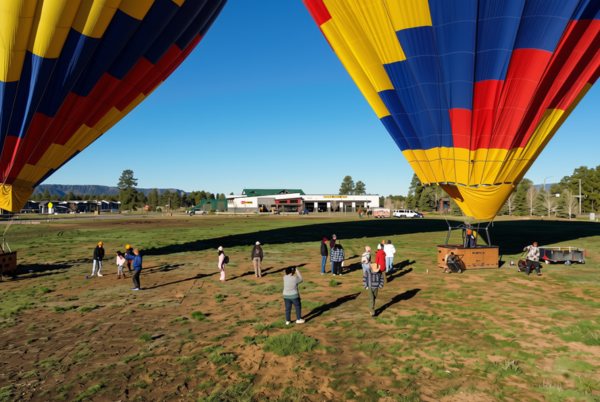
We meet our guests shortly after sunrise, when the mountain air is typically calm and stable, creating ideal conditions for hot air ballooning.
You’ll meet your pilot and crew, receive a brief orientation, and get ready for your flight over the beautiful Pagosa Springs area.
During our busiest times of year, we may operate back-to-back flights. This does not reduce your time in the air.
2. Balloon Inflation
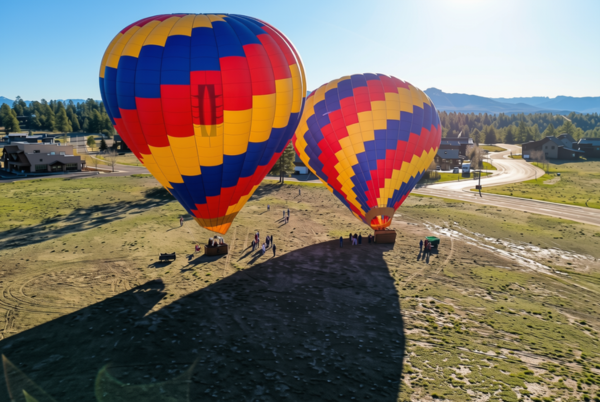
Hot air ballooning can be a hands-on adventure, and we invite you to join the crew during the setup and inflation of the balloon.
Have your camera ready as the colorful envelope fills with air and our approximately 120-foot-tall balloon rises from the ground. Watching a hot air balloon come to life is one of the most exciting parts of the experience.
3. Ascend to the Sky

Once the balloon is ready, it’s time to climb aboard the basket and take to the sky.
The ascent is remarkably gentle. As you rise above Pagosa Springs, the landscape begins to unfold beneath you, revealing valleys, lakes, forests, and the surrounding San Juan Mountains.
Because a hot air balloon travels with the surrounding air, you feel very little wind while flying. The result is an incredibly peaceful way to experience Southwest Colorado from above.
4. Float Through the Air

Every hot air balloon flight is unique because our direction and route are determined by the winds that morning.
Depending on conditions, we may float low over the landscape or climb higher for expansive views of Pagosa Springs and the surrounding mountains.
Along the way, your pilot will share stories about ballooning and the Pagosa Springs area. Keep an eye out for local wildlife, too. You may spot hawks, ospreys, bald eagles, and other wildlife as you drift peacefully through the sky.
5. Landing & Balloon Deflation

As your flight comes to an end, your pilot will select an appropriate landing location based on the winds and conditions that morning.
But landing doesn’t mean the adventure is over.
After touching down, you’ll have the opportunity to help the crew deflate and pack the balloon. Guests are often amazed to see how quickly such an enormous aircraft can be packed away.
6. Closing Ceremony

We finish the adventure with a traditional ballooning celebration inspired by the earliest days of balloon flight in France.
Enjoy a beverage as we celebrate your flight, and receive a personalized flight certificate to remember your Rocky Mountain Balloon adventure.
Hot Air Balloon Flight FAQs
How Do Hot Air Balloons Work?
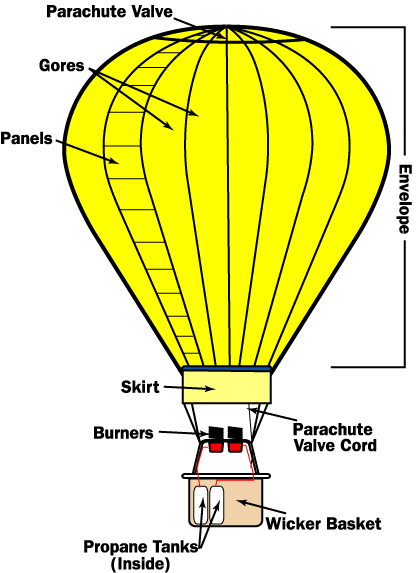
A hot air balloon has three essential parts: the burner, which heats the air; the balloon envelope, which holds the air; and the basket, which carries the passengers.
Hot air balloons are based on a very basic scientific principle: warmer air rises in cooler air. Essentially, hot air is lighter than cool air, because it has less mass per unit of volume. A cubic foot of air weighs roughly 28 grams (about an ounce). If you heat that air by 100 degrees F, it weighs about 7 grams less. Therefore, each cubic foot of air contained in a hot air balloon can lift about 7 grams. That’s not much, and this is why hot air balloons are so huge — to lift 1,000 pounds, you need about 65,000 cubic feet of hot air.
To keep the balloon rising, you need a way to reheat the air. Hot air balloons do this with a burner positioned under an open balloon envelope. As the air in the balloon cools, the pilot can reheat it by firing the burner.
Piloting a balloon takes skill, but the controls are actually very simple. To lift the balloon, the pilot moves a control that opens up the propane valve. As you turn it, the flow of gas increases, so the flame grows in size. The pilot can increase the vertical speed by blasting a larger flame to heat the air more rapidly.
Hot air balloons also have a cord to open the parachute valve at the top of the envelope. When the pilot pulls the attached cord, some hot air can escape from the envelope, decreasing the inner air temperature. This causes the balloon to slow its ascent. If the pilot keeps the valve open long enough, the balloon will sink and this is how it eventually lands.
(Excerpts and diagram courtesy of Science, How Stuff Works, where you can read the full article.)